House Bill of Lading (HBL)

What Is a House Bill of Lading?
A House Bill of Lading (HBL) is the document a freight forwarder gives to the shipper for the goods it has agreed to move. It is the forwarder’s receipt for the goods. It is also the contract of carriage between the forwarder and the shipper.
In simple words, the HBL tells the shipper the goods have been taken in. It also shows where the goods are going and who can collect them after arrival.
The HBL is not the customs form and not the invoice. Those documents have different jobs. But their details should match, because customs and banks often check them against each other.
When Is the HBL Used?
A forwarder does not own ships. So when it accepts cargo, it issues its own bill — the HBL — and books space with the shipping line under a separate document. The HBL is common in these cases:
- Consolidated cargo. Several sellers share one container. The forwarder receives the goods under one MBL and issues one HBL to each seller.
- Seller-controlled shipments. The seller books through a forwarder and wants the transport document to name its buyer directly.
- DDP terms. The forwarder holds the line booking and the transport documents, so the seller keeps control until delivery.
- Direct bookings. Even on a direct booking, a forwarder can issue its own HBL with the shipper and consignee named.
In every case, the HBL travels with the goods. At destination, the buyer or its agent presents the HBL to the forwarder’s agent to arrange collection.
What Does It Show?
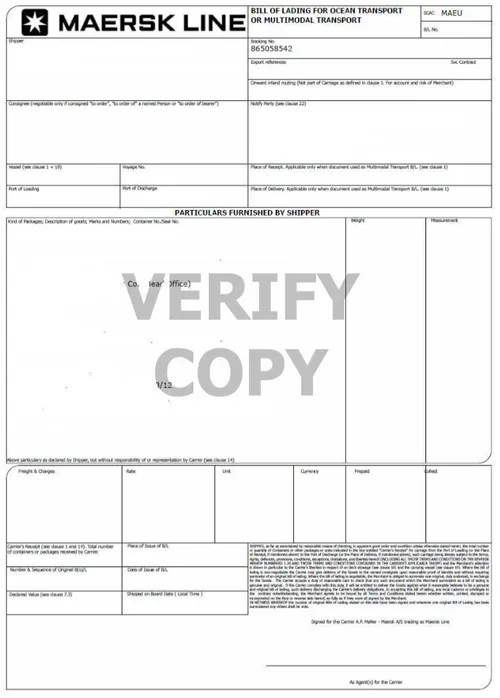
Different forwarders use different formats, but most HBLs show the same basic information.
- The people involved. Who sent the goods and who will receive them.
- The route. The loading port, arrival port and delivery place.
- The goods. The number of packages, weight, volume and, for consolidated cargo, the shipment marks.
- The freight charges. Who pays the freight and whether it is prepaid or collect.
- The collection method. How the goods will be released after arrival.
If any of these details is wrong, the shipment can be held at destination while the document is corrected. It is much easier to check them before departure.
How Can the HBL Be Issued?
The forwarder can issue the HBL in the same forms as the shipping line. The form decides how the buyer takes delivery:
- Original HBL. The forwarder prints and signs paper originals for the shipper. The buyer presents at least one original to the forwarder’s destination agent to collect the goods.
- Telex release. The forwarder takes back the originals at origin and tells its destination agent to release the goods to the named consignee. No paper needs to travel.
- Sea waybill. A straight, non-negotiable document. The forwarder’s agent releases the goods to the named consignee without any paper.
- E-B/L. The forwarder issues an electronic document of title through an approved platform. It works like a paper original, without the courier.
An original HBL gives the seller the most control, because the buyer needs the paper before collection. Telex release and sea waybill are faster, so sellers usually choose them once the payment is already secured.
HBL vs MBL: What Is the Difference?
The HBL and the Master Bill of Lading (MBL) can cover the same goods on the same vessel. Each one records a different contract of carriage:
| HBL | MBL | |
|---|---|---|
| Issued by | The freight forwarder, acting as the carrier | The shipping line |
| Contract between | The forwarder and the actual shipper | The shipping line and the booking party, usually the forwarder |
| Shipper shown | The actual seller | The forwarder, or its agent |
| Consignee shown | The actual buyer | The forwarder’s agent at destination |
| Typical use | Consolidated (LCL) cargo, DDP terms, or when the seller wants to keep control of the goods | Direct FCL bookings |
One container can carry many bills. The shipping line sees only its own MBL. The forwarder’s destination agent checks each HBL and releases each consignee’s share of the cargo.
Quote UsShip With Clear Documents
We match the HBL, the shipping line’s booking and the goods before your shipment moves — so collection is easier later.
Get a Free Quote