EU EORI Number

What Is an EU EORI Number?
An EORI number (Economic Operators Registration and Identification) is a unique identification number that customs authorities across the European Union assign to businesses and individuals involved in cross-border trade. It is mandatory for all customs operations in the EU customs territory — import, export and transit.
The number exists so that every trader, wherever it registers, carries one identifier that every EU customs authority recognises. It links declarations to a single accountable party and lets customs check that party’s history across the union, rather than re-registering the same business in each member state.
EORI stands for Economic Operators Registration and Identification. A person can hold only one valid EORI number at any point in time, and the number does not expire — though it can be invalidated if the trader requests it or ceases business. After invalidation, the recorded data is retained for 10 years.
An EORI number consists of a two-letter country code of the issuing EU country, followed by an identifier unique within that country (up to 15 alphanumeric characters). For example, a number issued in Germany starts with DE, while one issued in the Netherlands starts with NL.
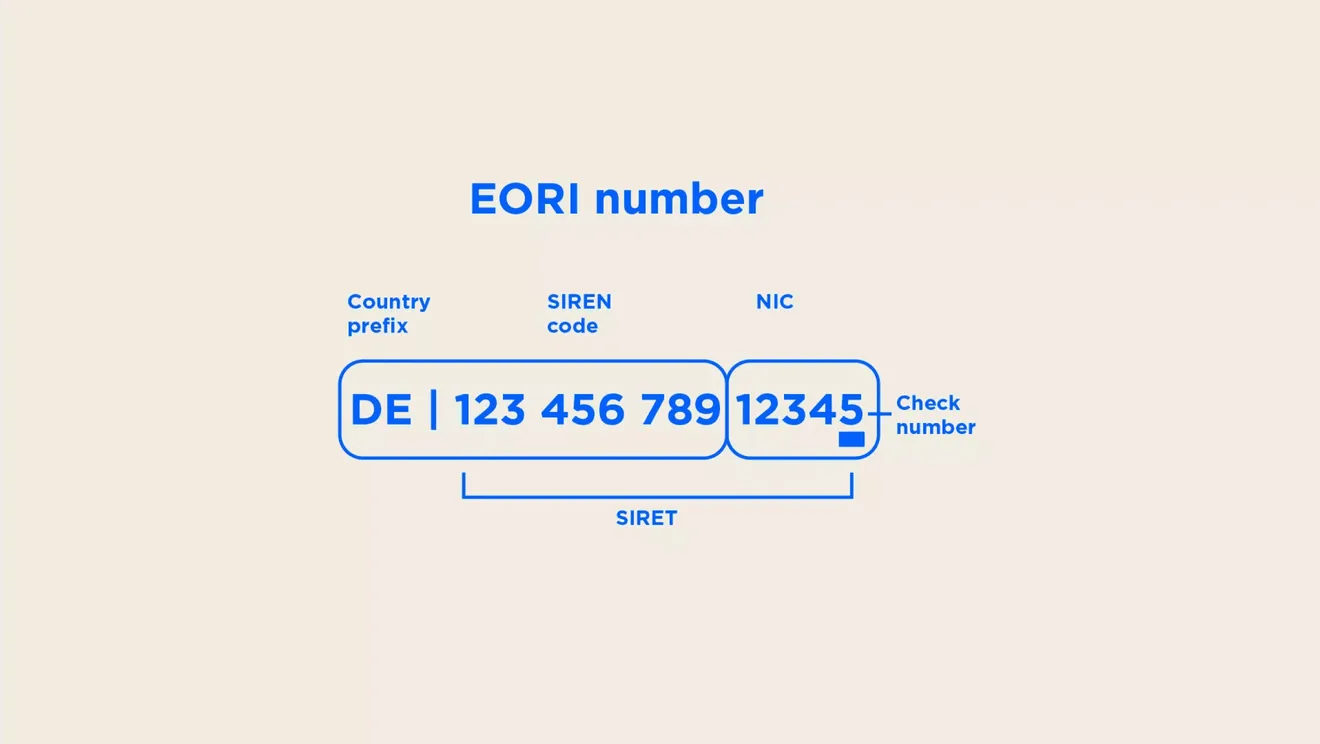
Each member state builds its EORI numbers on its own national business registry, so the digits after the country prefix vary by country — the prefix itself always identifies the issuing authority.
Since Brexit, Great Britain no longer participates in the EU EORI system. Businesses moving goods into or out of the UK need a separate GB EORI number, even if they also hold an EU EORI number for trade within the EU customs territory.
Why the EORI Number Matters
Customs will not clear a commercial shipment without a valid EORI number tied to the declarant. The number appears on every customs entry, and a missing, invalid or mismatched identifier is one of the most common reasons cargo is held at the border. What is at stake:
- Clearance dependency. Every import, export and transit declaration requires a valid EORI number. No number — no clearance, and the cargo waits at the port or airport.
- Who applies where. Economic operators established in the EU apply to the customs authority of the country where they are established. Non-EU operators apply in the EU country where they intend to carry out their first customs operation.
- Consistency across documents. The name, address and EORI number must match on the commercial invoice, the customs declaration and the transport documents. Inconsistencies trigger value reviews, red-channel exams or penalties.
- Beyond the importer. EORI numbers are not limited to importers. Carriers, customs brokers and anyone lodging an entry summary (ENS) or exit summary (EXS) declaration also needs one.
The practical step is simple: before your first shipment into the EU, confirm that the party named on the customs entry holds a valid EORI number and that the details on all documents match. A free validation tool on the European Commission’s website lets you check any number in seconds.
Quote UsClear EU Customs Without the Guesswork
From EORI validation to duty calculation, our EU DDP lines handle the compliance details before your cargo sails — the number you see is the number you pay.
Get a Free Quote