Conformity Certificates

What Is a Conformity Certificate?
A conformity certificate — often called a Certificate of Conformity (CoC) — is a document proving that your product meets the technical regulations, safety standards and labelling rules of the destination market. Where a certificate of origin states where goods were made, a conformity certificate states that they are safe and legal to sell there.
The certificate is issued by an accredited inspection or certification body after the product has been tested, or its documentation reviewed, against the destination country’s technical regulation. Depending on the scheme, it covers a single shipment or a registered product valid for a period — and it is tied to the standards of the destination, not of the factory or the origin country.
Conformity schemes target regulated categories: electrical and electronic goods, textiles, toys, cosmetics, food-contact items and automotive parts are the usual suspects. If your product touches one of these categories, the destination market almost certainly has a technical regulation waiting for it.
Major Conformity Schemes
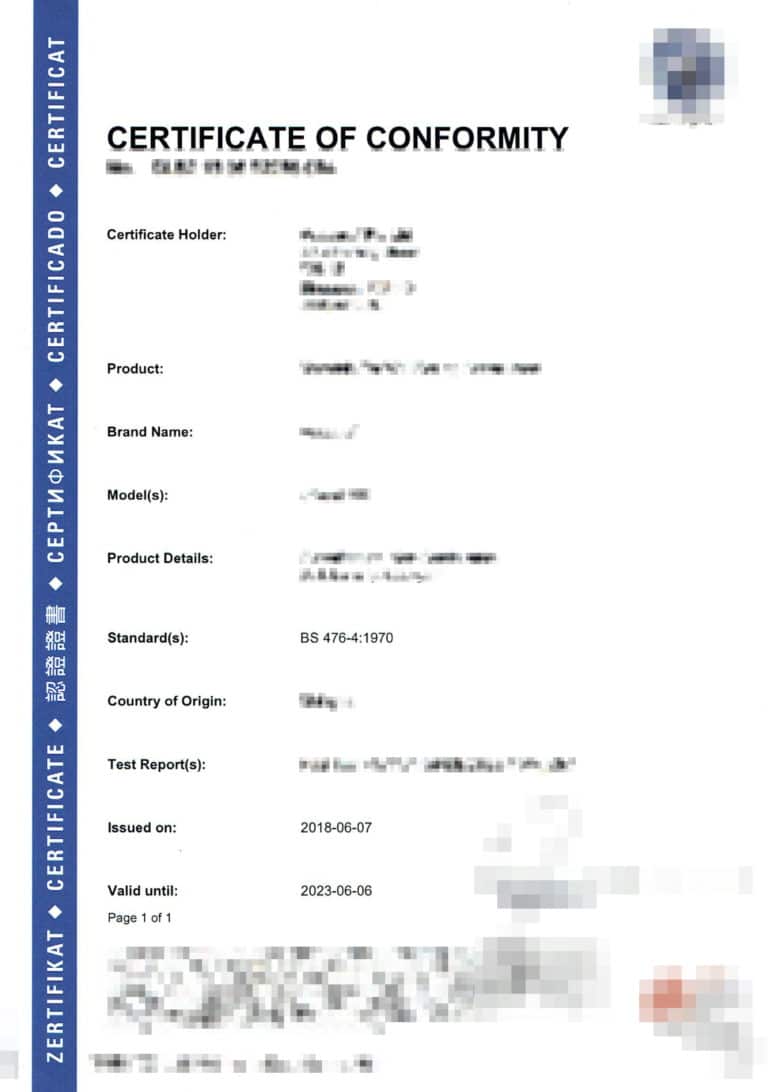
Each market runs its own programme with its own platform, certificate and name. The ones we deal with most from China:
- Saudi Arabia — SABER: importers register each shipment on the SABER platform and obtain a Shipment Certificate of Conformity against Saudi (SASO) technical standards. The certificate must exist before the cargo ships, or clearance stalls at the border.
- UAE — ECAS: the Emirates Conformity Assessment System under the Ministry of Industry & Advanced Technology. Electricals, textiles, toys, cosmetics and food-contact items are the big categories; food and health products also need registration with the health authorities.
- Kenya — PVoC: the Pre-Export Verification of Conformity programme, administered by KEBS. Regulated goods need a Certificate of Conformity issued by an inspection body before shipment.
- Nigeria — SONCAP: the Standards Organisation of Nigeria Conformity Assessment Programme. It pairs product certification with a per-shipment SONCAP certificate required for customs clearance.
Clearance Starts Before the Cargo Ships
From SABER in Saudi Arabia to ECAS in the UAE, our DDP lines handle conformity paperwork as part of the route — so your goods sail with the certificates they need, not the delays they don’t.
Get a Free Quote