China to USA OOG Shipping Solution: 58 x 40' Flat Racks to LA in 12.5 Days

The Shipment in Brief
In late July, CSL shipped one of the largest OOG (out of gauge) projects we have handled to date. The cargo moved on 58 x 40' flat-rack containers, loaded at Shanghai Waigaoqiao Port on July 30 and berthed at the TraPac terminal in Los Angeles on August 12. Port to port: 12.5 days, exactly on the booked schedule.
Oversized cargo must be planned in advance. Ocean freight is only one part of the project. The full plan also covers cargo survey, lashing, customs, terminal discharge and inland transfer. If any of these steps fails, the cargo waits at the port and the schedule slips.
This article explains what moved, how we secured 58 x 40' flat racks during typhoon season, and how the same solution serves Chicago, Dallas, New York and the rest of the US interior.
One booking, one team, one schedule. The project in numbers:
| Item | Details |
|---|---|
| Route | China to USA: Shanghai Waigaoqiao Port → TraPac Terminal, Los Angeles |
| Transit | 12.5 days, port to port, on schedule |
| Cargo type | Out of gauge (OOG) project cargo |
| Equipment | 58 x 40' flat-rack containers |
| Departure | July 30 |
| Arrival | August 12 |
* Departure and arrival are the actual sailing and berthing dates of this project.
What Counts as OOG Cargo?
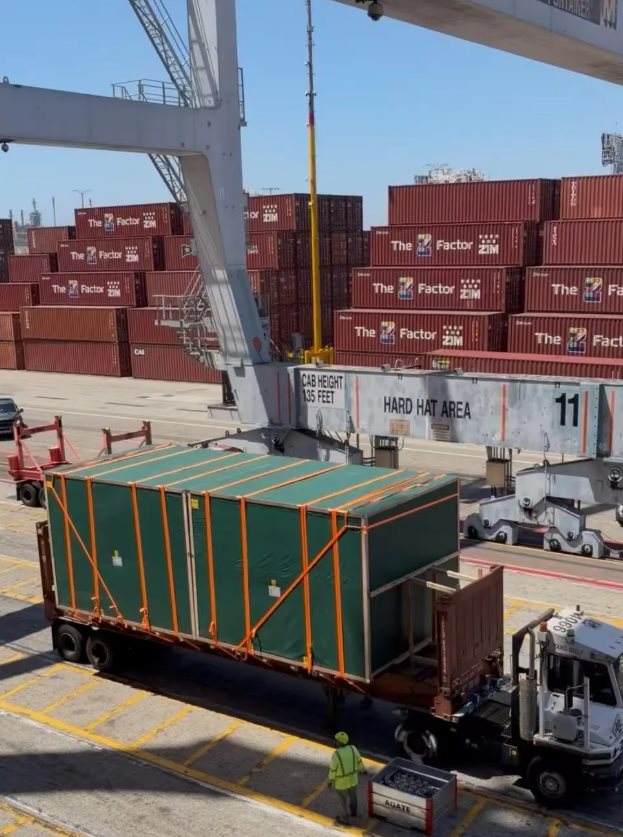
OOG stands for out of gauge. It means cargo that is longer, wider or taller than the internal space of a standard dry container. This cargo cannot pass through the container doors or be closed inside the box, so it needs open equipment.
Typical OOG cargo includes construction machinery, transformers, pressure vessels, structural steel, precast concrete, yachts, vehicles and large industrial modules. If cargo overhangs a flat rack in any direction, it is out of gauge.
Why 40' flat racks carry the heaviest projects. A flat rack has no roof or side walls. Cranes can load cargo from above or the side. Its strong floor carries heavy units, and the open size is easy to measure for stowage. For machinery and steel structures, it is often the only practical option.
The trade-off you must plan for. Open racks expose cargo to weather. Use a securing plan, anti-slip and anti-sway measures, and covers where needed. Overhangs add surcharges, and terminal lifting must be confirmed early. This is why OOG is priced as a project, not a standard rate.
How the Solution Came Together
Most of a 58 x 40' flat-rack project is decided before the vessel sails. Here is the sequence we ran:
1. Cargo survey and equipment selection. We measured each unit: dimensions, weight and lifting points. Then we matched each unit to a flat-rack slot and planned the stowage across all 58 boxes. This step fixed the box count, the vessel space and the cost.
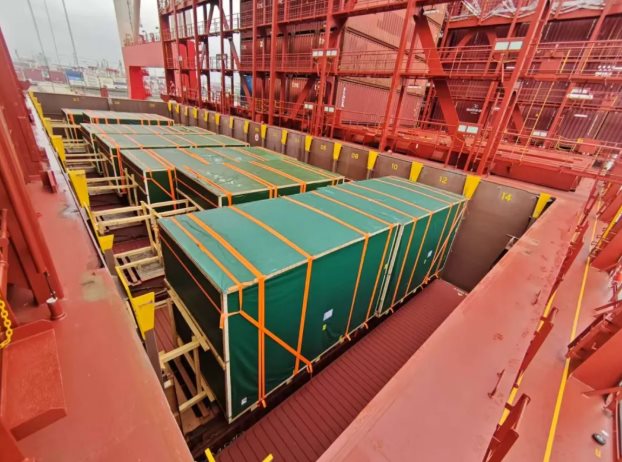
2. Lashing and sea-fastening. Each piece was secured under a purpose-built lashing plan: steel wire, tensioners, timber blocking, anti-slip and anti-sway measures. On a typhoon-season crossing, good lashing keeps the cargo intact. Poor lashing leads to damage claims.
3. Customs and documentation. Export declarations were filed in Shanghai. The US-side paperwork matched the Importer of Record setup, so customs clearance did not delay the flat racks at the port.
4. Fixed-day ocean booking. All 58 slots were booked on a fixed-day US West Coast express service. This weekly rotation is the same service e-commerce sellers use, and it is open to OOG and other time-critical cargo. A published schedule gives the whole project a fixed date to plan around.
5. Discharge, pickup and inland rail. At Los Angeles, cranes discharge the flat racks and trucks pick them up directly at the TraPac terminal, so the boxes do not wait in port. On-dock rail then carries them into the US interior without extra terminal handling.
On Schedule Through Typhoon Season
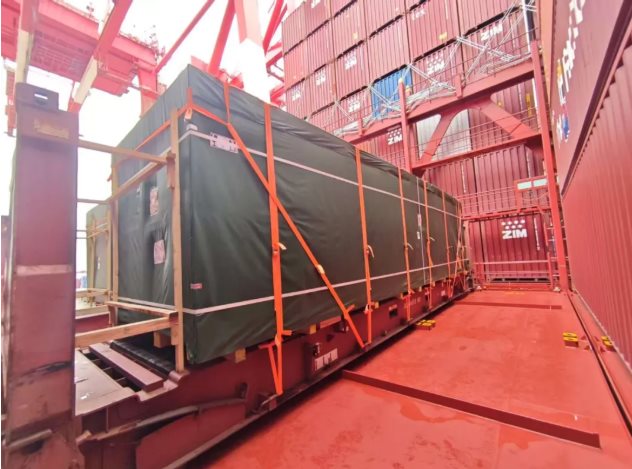
The voyage crossed the Northwest Pacific in mid-summer, when several tropical cyclones were active in the service area. This is when project cargo most often misses its schedule.
The service runs a fixed-day rotation with pre-booked slots, so the vessel stayed on schedule. It left Shanghai on time, berthed at TraPac on time and discharged all 58 x 40' flat racks without a missed connection. For project cargo, this certainty is worth more than a small saving on freight. Crane bookings, factory schedules and inland deliveries all depend on the arrival date.
Inland Coverage From Los Angeles
Los Angeles is not the end of the journey. Trucks pick up the flat racks quickly at the TraPac terminal, and the on-dock rail network carries them to rail ramps across the country:
| Inland destination | Rail leg from LA | Total from Shanghai |
|---|---|---|
| Chicago | 5 days by rail | 17.5 days |
| Dallas / Kansas City | 6 days by rail | 18.5 days |
| New York / Memphis | 8 days by rail | 20.5 days |
* Rail transits are typical working days for the rail leg; final delivery time varies by ramp and season.
Cross-border e-commerce sellers use the same rail connections to restock inland warehouses. Machinery exporters use them for door-to-site deliveries. Either way, the cargo arrives inland with its lashing intact, with no re-packing or re-securing.
Key Takeaways
- OOG is an engineering task first and a booking second. Dimensions, weight and lifting points decide the equipment, the cost and the timeline.
- Flat racks are open, so weather can reach the cargo. In return, loading is easier. The lashing plan decides whether your cargo arrives undamaged.
- Fixed-day schedules make the arrival date predictable. The vessel keeps a fixed weekly rotation, so the whole project can plan around one date.
- Los Angeles plus on-dock rail reaches the US interior. No extra terminal handling between vessel and train.
- One team owns the whole chain. Lashing, customs, ocean, discharge and inland transfer are handled by the same team. That is how 58 x 40' flat racks arrive in 12.5 days.
Ready to ship oversized cargo?
CSL handles the whole OOG shipment as one plan: lashing, customs, ocean space, discharge and inland transfer, from Chinese ports to US inland destinations.
Get Quote